
High-volume cabinet production
Shops running hundreds of doors per shift need a system that keeps pace without performance drop-off. VA turnkey cobots maintain the same cycle time on door 500 as on door 1, with the same safety and ease of operation.
When VA set out to build a robotic sanding system for woodworking, the most important decision came first: choosing the right robot. Not the one that looks best in a brochure, but the one that can actually stand up to real shop conditions — sanding doors all day, every day, in a dusty woodworking environment, while delivering industrial-grade reliability, high-safety, low maintenance, and the same finish quality on the 10000th door as on the 1st door. For us, the answer was clear Fanuc CRX.
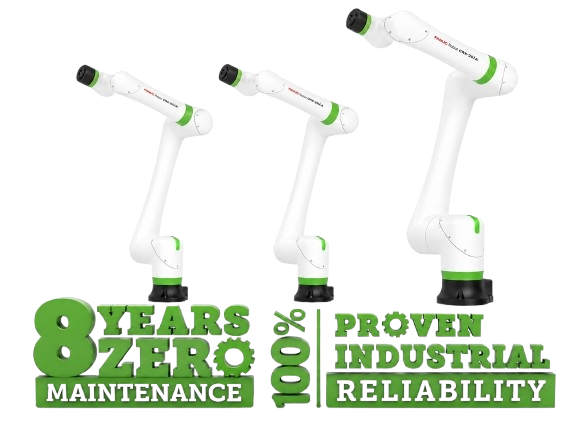
Fanuc is the world's largest industrial robot manufacturer. Their robots run in automotive assembly plants, aerospace facilities, pharmaceutical labs, and food processing lines — environments where precision, reliability, and continuous operation are non-negotiable. The CRX series brings that industrial-grade DNA into a collaborative form factor built for operator-near production environments.

Supports the full multi-head EOAT — orbital disc, detail pad, and edge head — with consistent precision and control.

It gives the robot the flexibility to reach faces, edges, profiles, and corners at the right angle for highly consistent, high-quality sanding.

Sealed across the full body to resist dust and moisture, with protection built for the fine MDF dust found in woodworking shops.

No lubrication intervals. No belt replacements. No planned robot service downtime. It just keeps running.
Industrial robots are not designed to work alongside people in shared workspaces. They are typically heavier, require caging, are built for high-payload tasks, and often do not include built-in force sensor for active pressure control. For sanding — where consistent force, precise pressure, continuous operation, suitable payload, and high safety for working near operators matter most — collaborative robots are often the better fit.
| Specification | Collaborative Robot | Industrial Robot |
|---|---|---|
| Payload Capacity | 10-30 kg suitable | 12 kg typical |
| Force Sensor | Included — industrial-grade active force sensor from the factory | Not included — passive sensor are often added as a lower-cost option |
| Pressure Control | Precise, repeatable downward pressure | Inconsistent, non-repeatable downward pressure |
| Cycle Speed | High - fast with consistent pressure | High - fast but inconsistent pressure |
| Duty Cycle | Continuous multi-shift production | Continuous multi-shift production |
| Safety | Built for safer operation — no caging | Not safe on its own — needs caging |
| Environmental Rating | IP67 — full-body protection | IP67 — often only at the wrist |
| Maintenance | No maintenance for years | Regular maintenance — no exception |
| Delivery Model | True turnkey cell — no integrator, no programming needed | Marketed as turnkey, but still needs preset part size programming and fixed placement |
Some competitors sell industrial-robot-based sanding that require fixed part placement and preset programming to run different parts, along with cheaper passive force sensor that can never deliver the consistent pressure needed for quality and production. They also often come with months of delivery and installation. Vancouver Automation takes a different approach — the FANUC CRX industrial-grade robot, with its integrated active force sensor, comes inside a complete turnkey sanding cell. No programming. No fixed placement. No months of installation.
Industrial-grade robotic sanding isn't limited to one type of shop. Any production environment running volume sanding benefits from the reliability, throughput, and consistency of an industrial system.
Shops running hundreds of doors per shift need a system that keeps pace without performance drop-off. VA turnkey cobots maintain the same cycle time on door 500 as on door 1, with the same safety and ease of operation.
Shops producing for multiple clients need consistent quality across every order. VA's active pressure control delivers no difference between the first door and the last door sanded that day.
Shops running two or three shifts need equipment built for continuous duty. VA turnkey cobots are designed exactly for that.
Larger parts, heavier panels, and more complex sanding paths require the reach and force control that VA turnkey cobots are built to deliver.
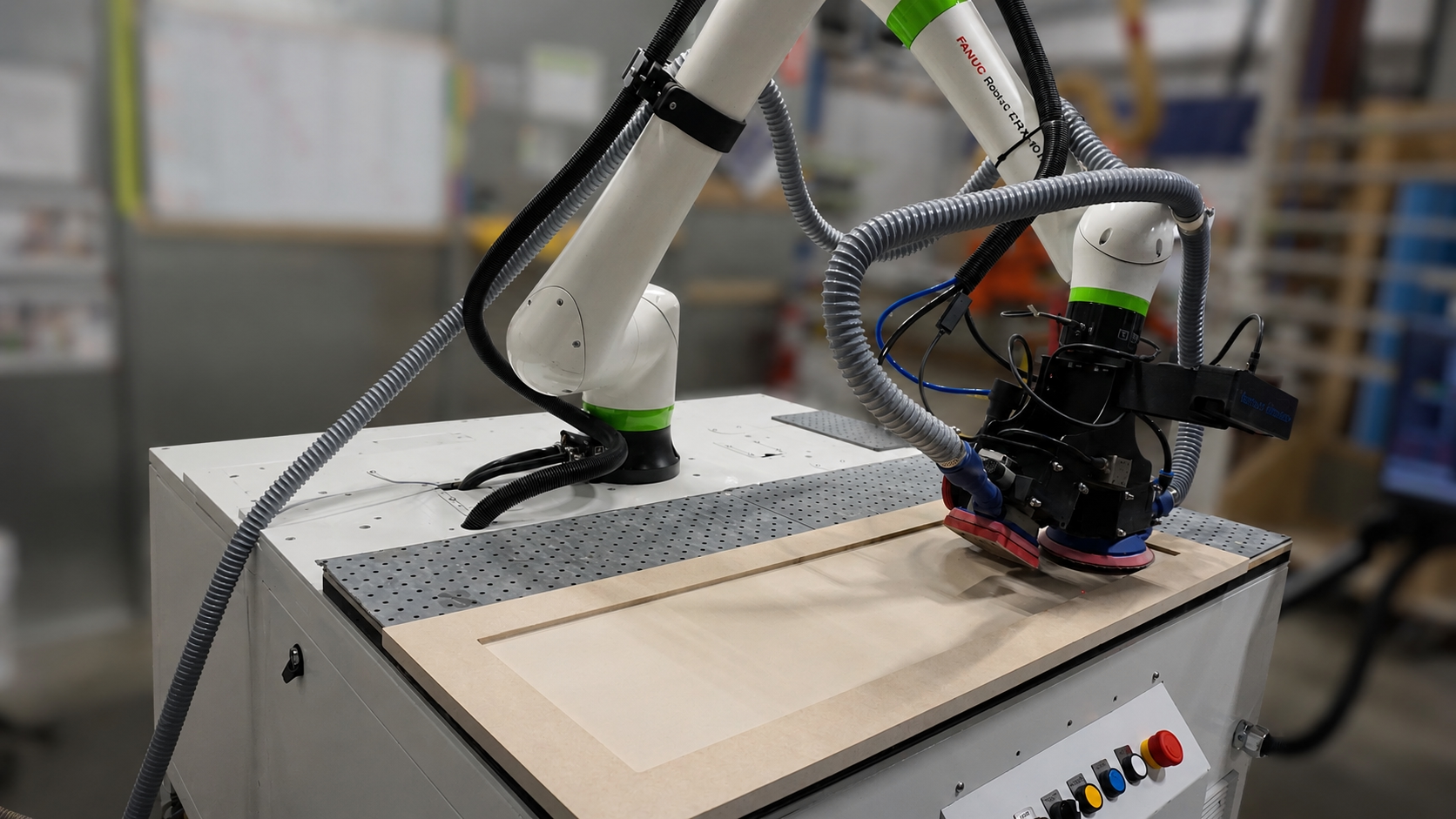
Compact AI sanding cell for reliable daily output in small and mid-size production lines.
Learn More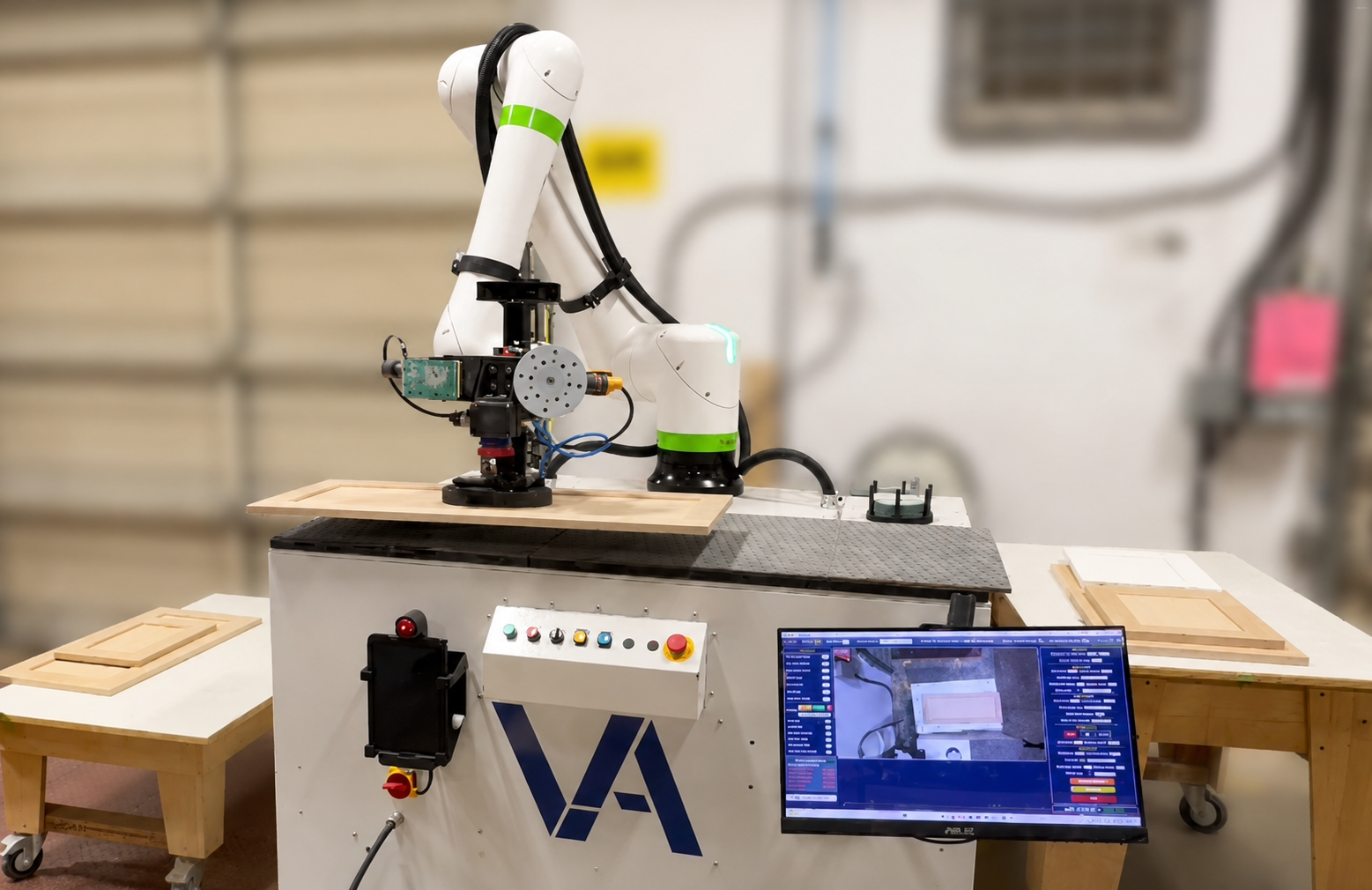
Core Pick-Sand-Place workflow for automated transfer and controlled sanding consistency.
Learn More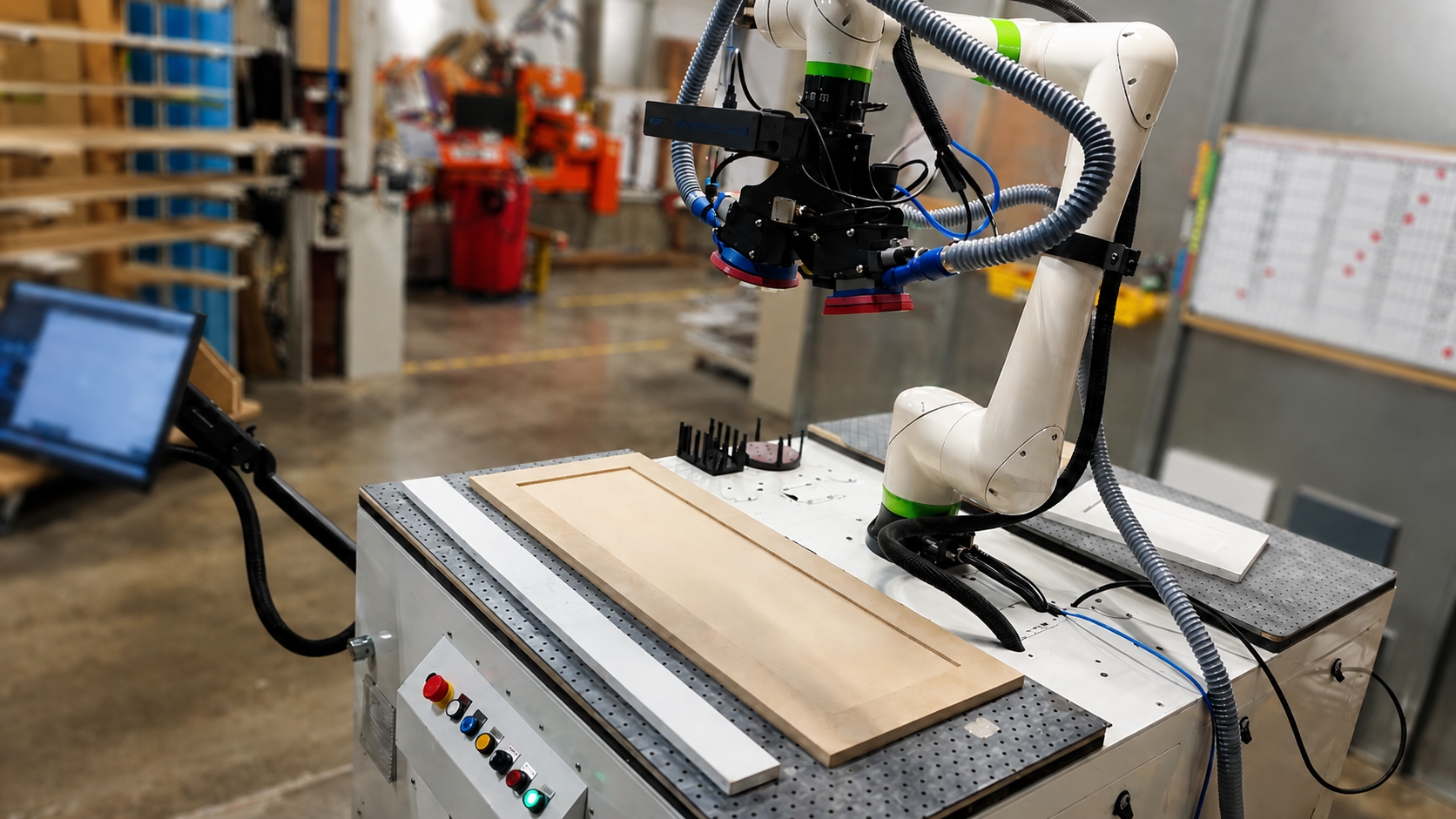
Dual-station setup for parallel sanding, maximizing throughput while reducing headcount.
Learn More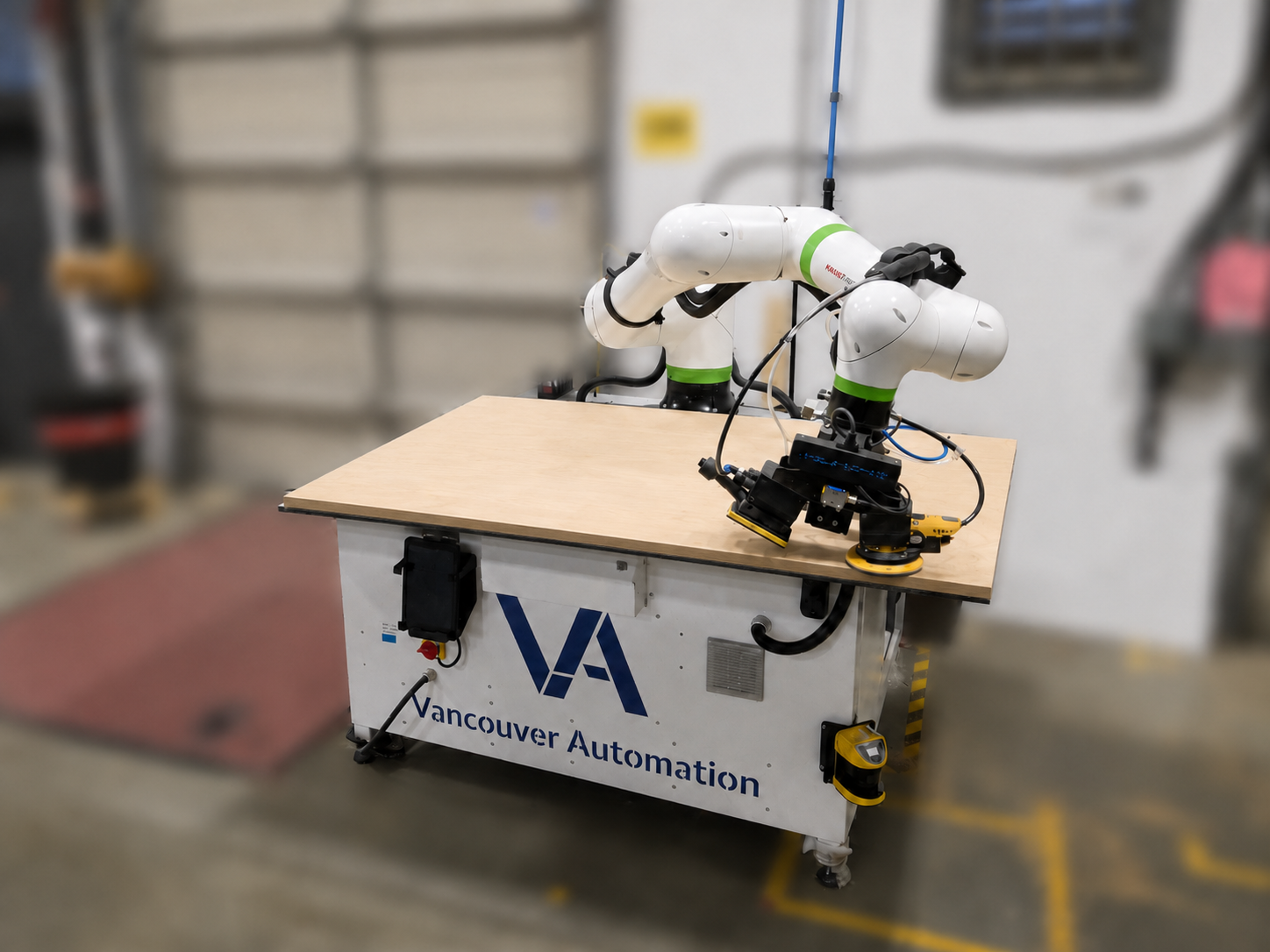
Large Work Range Sanding Platform built to handle larger parts with ease.
Learn More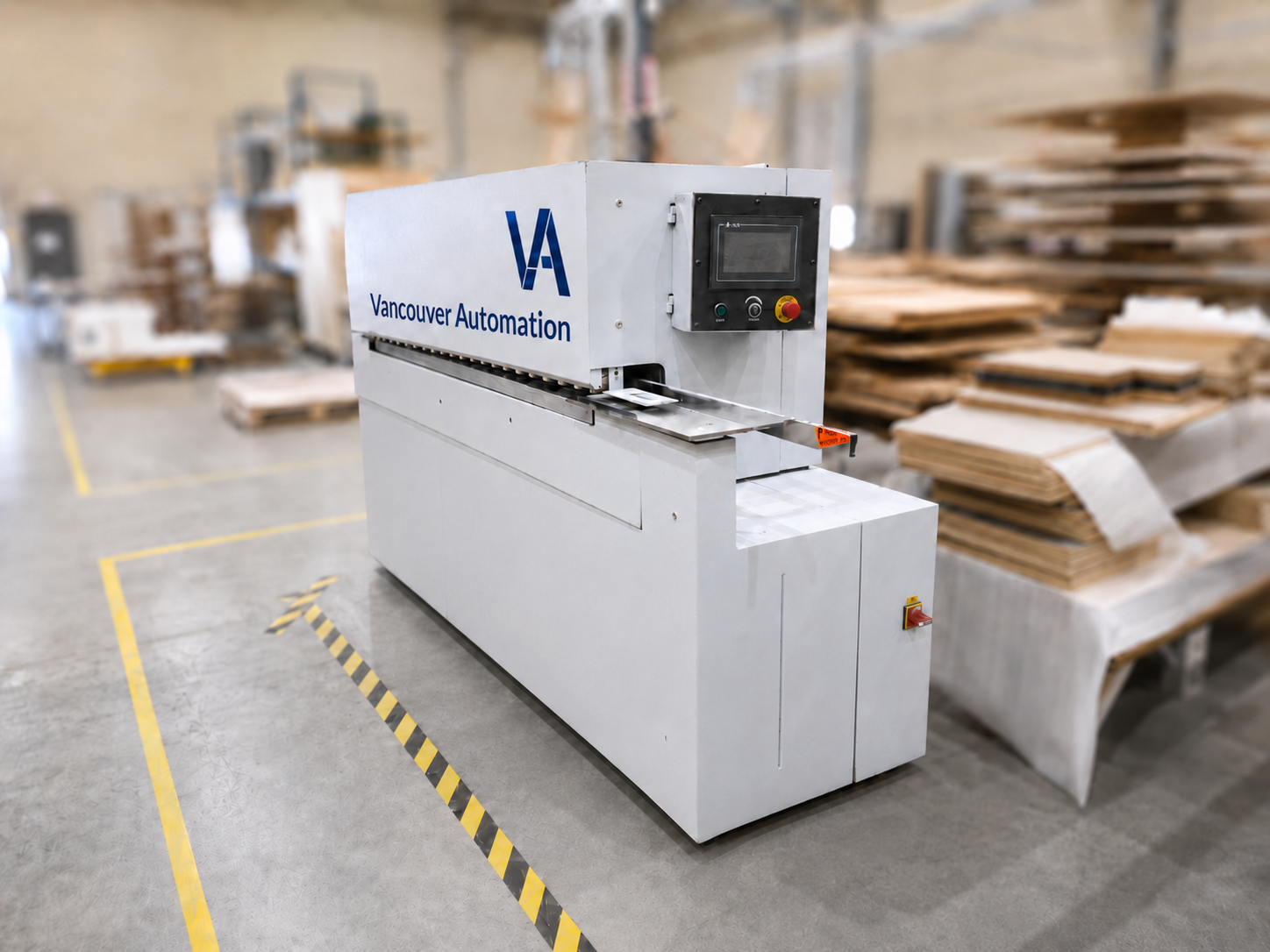
Dedicated edge-focused sanding platform for profile precision and corner consistency.
Learn More15 minutes. No slide deck. Just the robot sanding doors — live.